
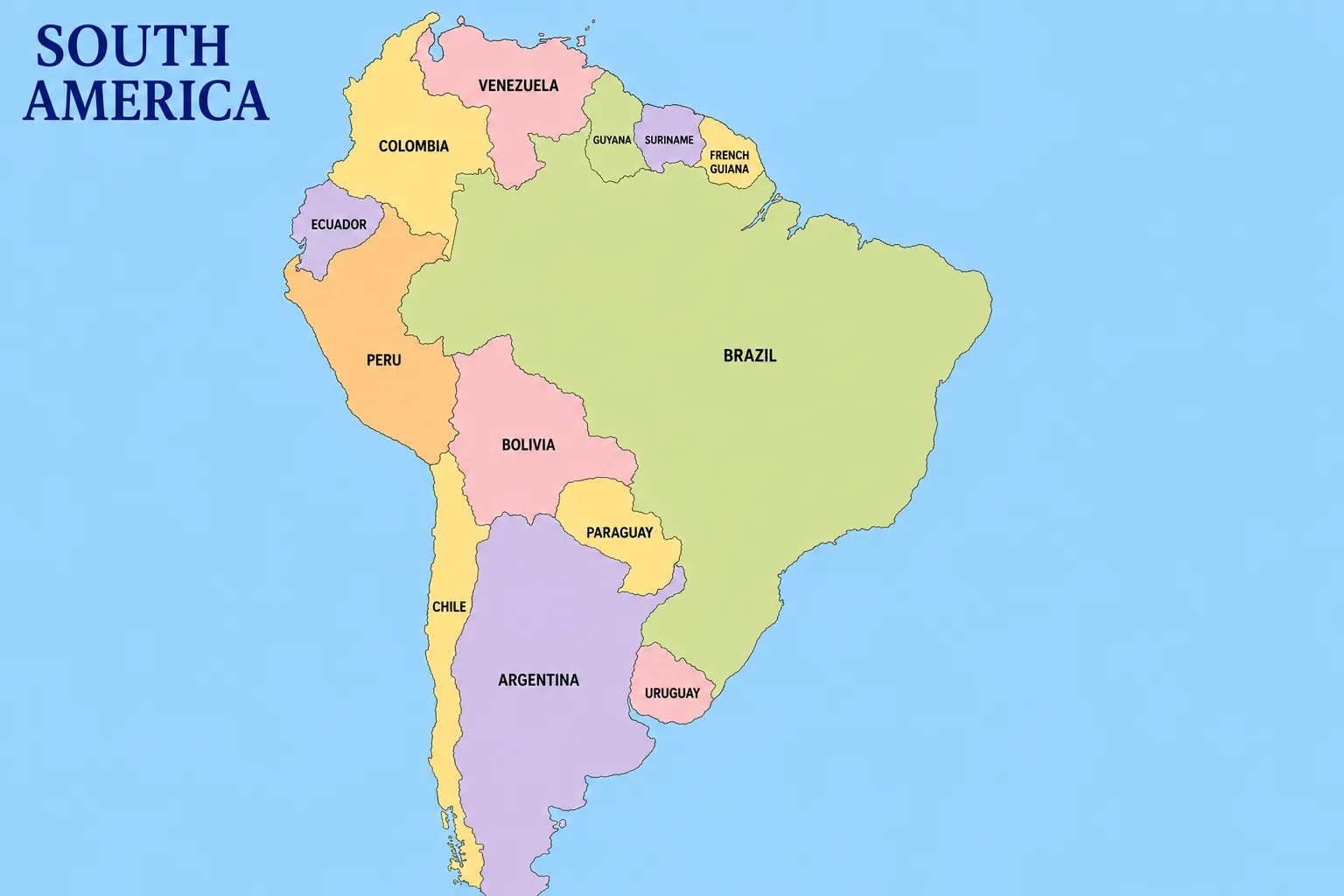
South America runs on a different authentication logic than most of the continents we've covered so far. Civil law traditions inherited from Spain and Portugal mean the notary, not the company seal, has always carried the real legal weight — but that hasn't stopped the company stamp from becoming a deeply entrenched administrative habit across nearly every economy on the continent, even where the underlying law no longer requires one.
This post is part of our global stamps & seals series. See the full 7-continent summary for the complete picture.
Brazil: Signatures Rule Legally, Stamps Rule Administratively
Brazilian company law generally relies on authorised signatures, not seals, for legal validity — but walk into any Brazilian business and you'll still find company stamps on invoices, customs documentation, and banking paperwork constantly. They're not legally required; they're operationally expected.
Where Brazil genuinely leads is digital authentication. The country runs its own public key infrastructure, ICP-Brasil, established under Provisional Measure 2.200-2/2001. A qualified electronic signature issued through an ICP-Brasil-accredited certifying authority carries a legal presumption of authenticity and integrity — meaning the burden shifts to whoever disputes it, not whoever relies on it. Law 14,063/2020 further classified Brazilian e-signatures into three tiers — Simple, Advanced, and Qualified — a structure explicitly modelled on the EU's own eIDAS framework. Brazil's Superior Court of Justice confirmed in 2023 that documents signed with ICP-Brasil certificates are legally binding even when challenged in court, and the country has since rolled out "e-notariado," a system allowing certain notarial acts to be completed by video conference with full digital signatures. For a country historically associated with mountains of stamped paperwork, Brazil's digital infrastructure is genuinely ahead of much of the world.
Argentina: Stamps for Habit, Signatures for Law
Argentine companies stamp constantly — internal approvals, tax documentation, administrative procedures — but legal enforceability rests on authorised signatures, not the stamp itself. Government agencies and financial institutions nevertheless often still expect stamped documentation as a matter of established business practice, so don't assume a signature alone will satisfy every counterparty even where it satisfies the law. What wins in a courtroom and what gets your paperwork past the counter clerk aren't always the same fight — and it's worth being equipped for both.
Chile: The Continent's Digital Government Leader
Chile has positioned itself as one of South America's strongest performers in digital government services and electronic signature adoption. That said, physical company stamps haven't disappeared from commercial practice — logistics, importation, and customs operations in particular still lean on them heavily, digital leadership at the government level notwithstanding.
Peru, Colombia & Ecuador: The Same Pattern, Different Emphasis
Across these three, the pattern holds steady with local flavour. Peruvian businesses regularly stamp invoices, tax filings, and commercial documents, with certain public sector interactions still expecting a stamp alongside a signature. Colombian businesses use stamps for document control and internal approvals, even as the legal emphasis shifts further toward authorised execution and electronic authentication. In Ecuador, stamps remain especially common in customs procedures, educational documentation, and public administration specifically — sectors where paper-based institutional habit tends to persist longest.
Uruguay, Paraguay & Bolivia: Digital Recognition, Analogue Habits
Uruguay formally recognises electronic signatures and digital authentication systems, yet many businesses continue maintaining traditional company stamps simply for operational convenience. Paraguay leans on corporate stamps heavily for import-export documentation and government dealings specifically. In Bolivia, institutions continue requesting company stamps on official submissions despite broader legal acceptance of authorised signatures — the gap between what the law permits and what the counter clerk expects showing up yet again.
Venezuela: Stamps Persist, Authority Still Determines Validity
Venezuelan business documentation frequently includes company stamps for administrative purposes, but legal validity ultimately depends on whether the person signing was actually authorised to act for the company — the stamp itself doesn't substitute for that underlying authority.
Guyana & Suriname: Two Different Legal Traditions, One Shared Outcome
Guyana's English common law heritage and Suriname's Dutch civil law influence have produced genuinely different legal starting points — but both jurisdictions land in a similar place in practice: company stamps continue showing up regularly in day-to-day business administration regardless of the underlying legal tradition.
Notarial Seals: The Real Authority Across the Continent
This is the throughline for all of South America: whatever a country has decided about ordinary company stamps, the notary's seal carries genuine, continent-wide legal importance for property transactions, company formation, sworn declarations, powers of attorney, and international documentation. As we saw with Mexico further north, South America's civil law tradition puts the notary — not the corporate stamp — at the centre of formal legal authentication.
Digital Authentication: The Direction of Travel
South America as a whole continues moving steadily toward electronic signatures, digital certificates, and online government services — tax administration and cross-border trade are the two areas seeing the fastest adoption. Brazil's ICP-Brasil system is the most developed example on the continent, but Chile, Uruguay, and others are moving in the same direction at their own pace.
Ethical Guidelines for Using Stamps and Seals Across South America
- Never use a company seal or stamp without proper authorisation — the stamp itself carries no legal weight without an authorised signatory behind it.
- Maintain secure custody arrangements — restrict physical access to designated personnel.
- Keep accurate records of seal usage — date, purpose, and authorising officer for every use.
- Replace damaged or outdated seals immediately — a worn or outdated stamp creates unnecessary friction with counterparties who expect a clean impression.
- Never imitate government emblems, tax authority marks, or official notarial seals — across every jurisdiction here, this is a serious legal matter, not a business dispute.
- Protect digital versions of company seals from unauthorised access or duplication — especially relevant given Brazil's rapid move toward qualified digital certificates.
- Establish clear internal policies governing both physical and electronic authentication tools — don't let your digital seal practices lag behind your physical ones.
What This Means for Nigerian Businesses
If you're trading with South America, the single most useful mental model is this: the stamp on a document you receive is almost never what makes it legally binding — the authorised signature is. But that doesn't mean you can skip the stamp yourself; your South American counterparty will very likely still expect to see one on your documentation, purely as a matter of established regional business culture. And if a transaction touches property, company formation, or a sworn declaration anywhere on the continent, budget for notarial involvement — it plays the same load-bearing role here that it does in Mexico.
This is exactly the kind of situation MALLAMIBRO KONCEPTS LTD helps Nigerian businesses prepare for — precision embossing seals for the counterparties who expect the physical formality, and high-resolution digital stamps and electronic seals (PNG, JPEG and PDF) for the growing digital-first share of transactions, so you're covered whichever way a South American deal actually closes.
This article is for general educational purposes only and does not constitute legal advice. Laws vary by country and change over time — businesses should seek jurisdiction-specific legal counsel before relying on any stamp or seal for the formal execution of documents.

Mallamibro Koncepts Ltd
Corporate stamps, seals, printing & branding — based in Ibadan, serving businesses nationwide.
Need Custom Stamps, Seals, or Branding?
Order online and we deliver safely anywhere in Nigeria, or walk into our Ibadan office and see the quality for yourself.