Picture this: a Lagos-based export company finally lands a deal with a distributor in Dublin. Everything's going well until the Irish partner's lawyer asks for "the company's common seal" on the agreement. Your team scrambles — do we even have one? Is it the same as our office stamp? Does it even matter?
This post is part of our global stamps & seals series. See the full 7-continent summary for the complete picture.
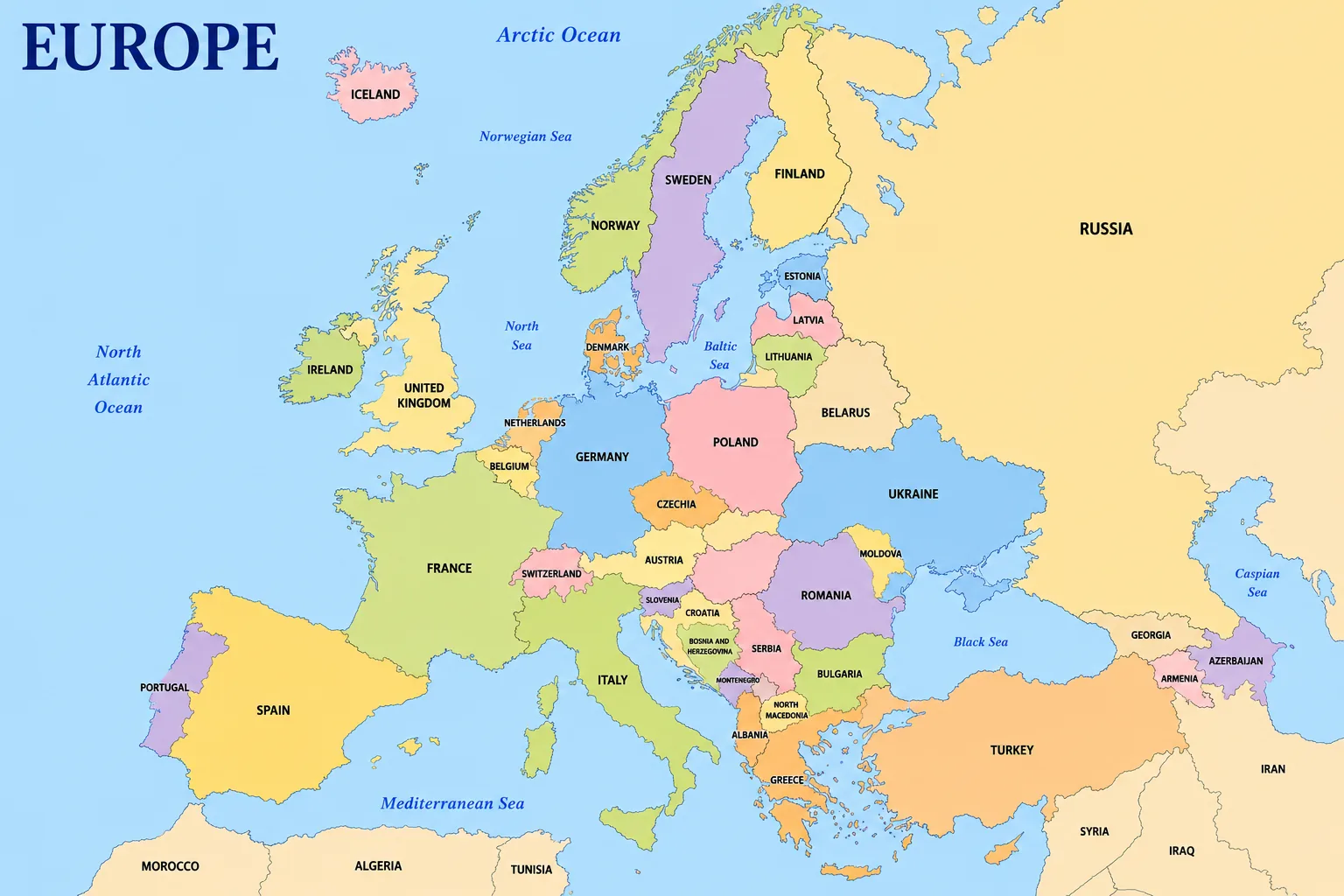
It matters more than you'd think, and the answer changes depending on which European country you're dealing with. Unlike Nigeria, where a single Companies and Allied Matters Act sets the tone nationwide, Europe has no single law governing stamps and seals. Each country writes its own rules — some make a company seal a strict legal requirement, others abolished the idea decades ago, and a few never required one in the first place. For any Nigerian business dealing with European partners, banks, or subsidiaries, that patchwork is worth understanding before it costs you a contract — and worth having a properly manufactured seal ready for, since "we didn't know Ireland still required one" isn't a sentence you want to be saying mid-negotiation.
Ink Stamps vs. Embossing Seals — A Quick Refresher
Before the country-by-country breakdown, a quick reminder of the difference, since European legal documents use both terms and they are not interchangeable. An ink stamp leaves a visible, inked impression on paper — used for routine administrative work, invoices, and everyday sign-offs. An embossing seal creates a raised, ink-free impression, and across Europe it's the one more closely tied to formal corporate authentication: contracts, deeds, share certificates, and notarial acts.
United Kingdom: Optional, But Still Around for a Reason
Here's a detail that surprises a lot of people: the UK actually abolished the mandatory company seal requirement back in 1989, and the current Companies Act 2006 (Section 45) simply carries that forward — a company may have a common seal, but isn't required to. If a company does keep one, the law is strict about one thing: the company's registered name must be engraved on it in legible characters, and getting that wrong is a criminal offence for both the company and its officers.
Most day-to-day UK contracts are now signed, not sealed — typically by two authorised signatories (directors or a director and company secretary), or by one director in front of a witness. Where UK companies still reach for a seal is deeds, share certificates, and — notably — international transactions, where an overseas bank or foreign registry might expect to see one regardless of what UK law technically requires.
Ireland: The Neighbour With the Opposite Rule
Cross the Irish Sea and the rule flips entirely. Under Section 43 of Ireland's Companies Act 2014, the law doesn't say a company may have a seal — it says a company "shall have a common seal" bearing its name in legible characters. This makes Ireland one of the clearer examples in Europe of a jurisdiction where the seal isn't optional tradition, it's statutory obligation.
The seal can only be used with authority from the company's directors (or a committee they've authorised), and any document it's affixed to must be signed by a director and countersigned by the secretary or a second director. Worth noting for anyone tracking this closely: recent amendments under the Companies (Corporate Governance, Enforcement and Regulatory Provisions) Act 2024 made permanent a rule allowing documents to be executed under seal "in counterparts" — useful when the seal and the signatories aren't in the same location at the same time.
Germany: Two Very Different Kinds of "Seal"
German business culture draws a sharp line between an ordinary commercial stamp (Firmenstempel) — common on invoices and correspondence, with no special legal status — and official government or notarial seals, which carry real legal weight. Imitating or misusing the latter isn't a civil matter; it can attract criminal sanctions. If you're dealing with a German counterpart, the stamp you see on their letterhead is convenience, not authentication — the signature is what actually binds them.
France: Signatures Rule, Stamps Persist Out of Habit
French companies stamp things constantly — invoices, delivery notes, official-looking correspondence — largely because it looks professional and administratively "correct." But legally, it's the signature (cachet vs. signature is a real distinction French businesspeople are quick to point out) that determines whether a document is valid, not the ink mark next to it.
Spain: Similar Story, Deep Institutional Habit
Spanish commercial and administrative practice leans on stamps heavily — you'll see them everywhere from bank documents to municipal paperwork — even in situations where a signature alone would satisfy the law. It's less a legal requirement than an entrenched bureaucratic expectation that's proven hard to shake.
Switzerland: No Requirement, Never Really Was One
Switzerland is one of the cleanest examples of a country where the stamp is pure custom. Under Swiss law, only the signature of an authorised legal representative validates a document — a stamp adds zero additional legal weight, and Swiss companies have never been statutorily required to use one. Where you'll still see them: invoices and quotes (for professional presentation), correspondence with authorities, and export documentation where a foreign counterpart's country expects to see a stamp even though Switzerland itself doesn't ask for one.
Italy: Deeply Embedded in Bureaucratic Practice
Italian businesses continue to lean on stamps and seals in banking, customs documentation, and dealings with public administration — sectors where old bureaucratic habits die slowly, regardless of what's strictly required on paper.
Netherlands: The Outlier That Skipped the Whole Tradition
Dutch commercial practice has never placed much weight on corporate seals at all. Authorised signatures do essentially all the legal work in the Netherlands, and stamps are more of a rarity than a norm — a useful reminder that "how things are done in Europe" genuinely varies country to country, not just in degree but in kind.
Central & Eastern Europe: Reform on Paper, Habit in Practice
Poland and its regional neighbours have spent the last decade steadily reducing the number of situations where a company stamp is legally mandatory. In practice, though, plenty of banks, customs offices, and counterparties still ask for one on invoices and certificates out of institutional habit — a gap between "what the law now allows" and "what the person across the counter still expects" that businesses trading in the region need to navigate carefully.
Notarial Seals: The One Constant Across the Continent
Whatever a given country decides about ordinary corporate seals, notarial seals remain a different story entirely — and their legal significance holds firm across virtually all of Europe. Powers of attorney, property transfers, affidavits, and cross-border declarations routinely require a notary's seal to be recognised as valid, regardless of how relaxed that same country's rules are about company seals in general.
Digital Authentication: Where Europe Is Actually Moving Fast
This is the part of European seal law that's changing the quickest, and it's worth Nigerian businesses paying attention to. The EU's original eIDAS Regulation (910/2014) already gave qualified electronic signatures and electronic seals the same legal standing as their physical counterparts for cross-border transactions. In 2024, that framework was significantly expanded by eIDAS 2.0 (Regulation (EU) 2024/1183), which introduces the European Digital Identity Wallet (EUDI Wallet) — a government-issued digital wallet every EU member state is legally required to make available to citizens and businesses, with a rollout deadline set for the end of 2026.
Once fully live, the EUDI Wallet will let businesses create and use qualified electronic signatures and seals recognised across all 27 member states from a single digital credential. For a Nigerian company that regularly emails invoices, contracts, or certifications to European partners, this is the direction the entire continent is heading: physical embossing increasingly reserved for the documents that truly demand it, while everyday authentication moves to verified digital seals.
Ethical Guidelines for Using Stamps and Seals — Anywhere
Whether you're operating under UK-style optionality or Irish-style obligation, the underlying good practice is identical everywhere:
- Never use a company seal without proper authority — board or director sign-off, every time.
- Maintain a seal usage register — record date, purpose, and who authorised each use.
- Store seals securely — restrict physical access to designated officers only.
- Replace obsolete seals immediately — if your registered name or registration number changes, the old seal is no longer valid to use.
- Never imitate governmental or notarial symbols — this crosses from a business matter into a criminal one in most jurisdictions.
- Restrict access to designated officers — a seal that anyone in the office can grab isn't really controlled at all.
- Apply the same internal controls to digital versions — a digital stamp or e-seal file deserves the same access discipline as the physical device it represents.
What This Means If You're a Nigerian Business Dealing With Europe
The practical takeaway: don't assume your Nigerian company seal or stamp automatically "translates" to whatever a European partner, bank, or registrar expects. An Irish counterpart may genuinely require a sealed document under statute; a Swiss or Dutch one may not care about a seal at all and just want your authorised signature. When in doubt, ask the specific institution what they require — and keep both your physical seal and a properly formatted digital version ready, since Europe is clearly moving toward digital authentication as the long-term default.
This is exactly the kind of dual-track approach MALLAMIBRO KONCEPTS LTD helps Nigerian businesses prepare for — precision-manufactured embossing seals for the documents that still demand a physical impression, alongside high-resolution digital stamps and electronic seals (PNG, JPEG and PDF formats) for the contracts and correspondence increasingly handled online. If your business is expanding internationally, having both ready, correctly specified, means one less thing to scramble for when a foreign partner's lawyer asks a question you weren't expecting.
This article is for general educational purposes only and does not constitute legal advice. Laws vary by country and change over time — businesses should seek jurisdiction-specific legal counsel before relying on any stamp or seal for the formal execution of documents.
Mallamibro Koncepts Ltd
Corporate stamps, seals, printing & branding — based in Ibadan, serving businesses nationwide.
Need Custom Stamps, Seals, or Branding?
Order online and we deliver safely anywhere in Nigeria, or walk into our Ibadan office and see the quality for yourself.